Thursday, October 31, 2019

Sample Chapter - A Timeline of Indiana History - 1795 - 1800 April 1796 - Chillicothe Ohio Established

Sample Chapter
A Timeline of Indiana History - 1795 - 1800
April 1796 - Chillicothe Ohio Established
Located on the Scioto River, the site is situated in south central Ohio and was part of the Virginia Military District. The name Chillicothe derives from a Shawnee word Chala•ka•tha, which means "principal town." The Shawnee tribe moved to the site in 1758 after a flood destroyed their village of Shannoah, or Sonnontio, also on the Scioto River. After the Treaty of Greeneville the area was opened for white settlement and the Shawnee had to leave.
Nathanial Massie (December 28, 1763 - November 03, 1813)
The son of Nathaniel and Elizabeth Watkins Massie, Nathanial was native to Goochland County, Virginia. Nathaniel served in the Revolutionary War. In 1783 he migrated to Kentucky to farm land his father owned. Massie had studied surveying and began exploring lands north of the Ohio River in the Virginia Military District of the Northwest Territory.
Virginia Military District 
During the period when the United States was attempting to establish a national government Virginia controlled most of the land in the Ohio River Valley. Maryland refused to ratify the Articles of Confederation unless Virginia ceded this vast region to the Federal government. Virginia did cede the land, but kept a large tract located in what is now south central Ohio to use to pay its Revolutionary War Veterans.
Surveying the Land
Many of the Revolutionary War veterans hired him to survey lands they received as grants for their war service. In 1790 Massie surveyed Manchester, along the Ohio River. During his survey work, Massie selected the best lands and bartered them for his surveying work. Thus, Massie acquired significant land holdings in what would become Chillicothe and Ross County, Ohio. Massie placed advertisements in various Kentucky and Virginia newspaper. He offered free lots in the new town to the first 100 settlers that migrated with him to the Northwest Territory. By March 1796 he had attracted about forty men bent of settling in the newly opened lands.
Chillicothe
Massie led this group up the Scioto River to settle at a point where Paint Creek empties into the Scioto River on April 1. He named the new town Prairie Station.  This site proved unsuitable, as it was low lying and subject to flooding. Thus, the settlers moved further upstream to the site of the former Shawnee town and began clearing land for their new settlement. The pioneers called the new town Massieville; however Massie changed the name to Chillicothe. The original plat had 456 lots. By late in the year the new town had taverns, stores and tradesman's shops. The town would later become the capital of the Northwest Territory and then the first capital of the new state of Ohio. Massie would settle in the town. He is interred in Grandview Cemetery, Chillicothe in Ross County, Ohio.

Monday, October 28, 2019

Short History of Museums


Short History of Museums

Description:
Publishing Date to be Announced
Preview Chapter 1
Preview Chapter 2
Preview Chapter 3
Buy Direct from Author
Softbound Price - $

Other Books in the Series

Available In Multiple Formats - Ebook And Softbound:
Draft to Digital Universal Link
Kindle
Amazon Softbound
Playster
Barnes & Noble
Barnes & Noble - Softbound
Kobo
Google Play
Scribid
24 Symbols
Walmart Books
Apple


The Bookshelf
101 N Walnut St,
Batesville, IN 47006

(812) 934-5800
bookshelf101@hotmail.com
Wholesale Pricing Available
For more information, contact:
Mossyfeetbooks@gmail.com
Orders over $50.00 Free Shipping
Join Paul Wonning on:
Facebook
Twitter
Linkedin
YouTube
Pinterest

Paul Wonning's Books on Amazon Page
Paul Wonning's Books on Scribd Page
Paul Wonning's Books on Apple
Paul Wonning's Books on Kobo
Paul Wonning's Books on Barnes and Noble
Paul Wonning's Books on 24 Symbols
Paul Wonning's Books on Google Play
Paul Wonning's Books on Indigo
Paul Wonning's Books on Playster
Paul Wonning's Books on OverDrive
Search Paul Wonning on Ingrams
© 2019 Paul Wonning

Sample Chapter - Short History of Museums - Capitoline Museums

Sample Chapter 
Short History of Museums
Capitoline Museums

Pope Sixtus IV donated several bronze statues to the city of Rome in 1471, placing the collection on Capitoline Hill. The museum, still in existence and open to the public, claims the status of the oldest museum in the world. The collection of artifacts and art grew over the years to include ancient Roman statues, inscriptions, art, jewels and other historic artifacts. Pope Clement XII opened the museum to the public in 1734. The museum includes three main buildings linked by an underground gallery that passes under the piazza. Visitors will find a restaurant on the top level that provides a magnificent vista of Rome

Musei Capitolini
Piazza del Campidoglio 1
Capitoline Hill
00186 Roma.
Telephone +39 060608
http://www.museicapitolini.org/en/

Sunday, October 27, 2019

Greenwood Mall Book Show

Greenwood Mall Book Show
1251 US-31 N
Greenwood, IN 46142
Saturday, November 30 - 9:00 AM - 9:00 PM
Sunday, December 1 11:00 AM - 6:00 PM
Sunday, December 8 11:00 AM - 6:00 PM
Sunday, December 15 11:00 AM - 6:00 PM
Sunday, December 1 11:00 AM - 6:00 PM
Sunday, December 1 8:00 AM - 10:00 PM
Sunday, December 29 11:00 AM - 6:00 PM

Indianapolis Christmas Gift and Hobby Show


Wednesday, November 6
Thursday November 7
Friday, November 8
Saturday, November 9 2019 
10:00 AM - 8:00 PM 
All three days
Indianapolis Christmas Gift and Hobby Show
Indiana State Fairgrounds
https://christmasgiftandhobbyshow.com

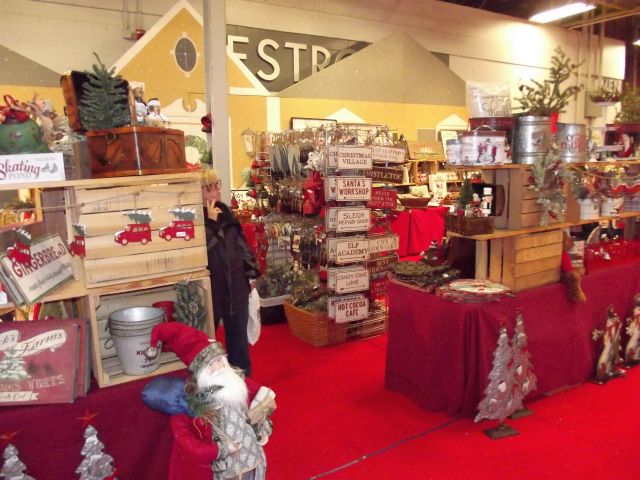
Some pics from the event


Thursday, October 17, 2019

Sample Chapter - Short History of Gardening and Agriculture - Steam Powered Farm Equipment

Sample Chapter 
Short History of Gardening and Agriculture 
Steam Powered Farm Equipment
Steam Engines
Thomas Aveling modified a Clayton & Shuttleworth portable steam engine in 1859, creating a self propelled machine that ranks as one of the world's first agricultural tractors. Aveling, and other tinkerers, experimented with the design of the machine over the next several years. By the beginning of the 1870's the shape of the tractor had been developed. The familiar four wheeled design remained dominant for the next several decades. These tractors packed a lot power for tasks like plowing and threshing wheat. The main drawbacks were that they were slow, heavy and hard to maneuver. The heavy machines frequently broke bridges down. They took a skilled operator as if improperly operated they would explode causing death and injury.
Thomas Aveling (September 11, 1824 - March 7, 1882)
The son of Thomas Aveling and Ann Aveling, Thomas was native to Fenland District, Cambridgeshire, Great Britain. His father died when he was young, after which the family migrated to Hoo. There his mother married Rev. John D'Urban. His father apprenticed him to a local farmer, Edward Lake. Aveling married D'Urban's daughter, Sarah. The couple would have six children. Aveling acquired a farm and operated a drainage tile business. In 1859 he modified a Clayton & Shuttleworth portable engine by attaching a long chain between he crankshaft of the engine and the rear axle. This machine became the nucleus of the traction engine that would evolve into the modern farm tractor. Many regard him as the "the father of the traction engine." He invented the steam roller and, along with Richard Thomas Porter founded the Aveling & Porter Company to manufacture steam rollers.
Threshing Machine
The threshing machine performed the work of the flail in threshing wheat. The mechanized thresher separated wheat grain from the straw and chaff in a series of steps. The farmer first fed the bundles of straw into a hopper on the machine. The bundles went into the separator, which was a series of rapidly rotating blades. These blades tore the bundle apart by cutting the twine that held them together and beat the grains from the heads without crushing the grains. The wheat then passed through a series of successively smaller screens that separated the straw and chaff from the wheat grain. The grain fell into a hopper where it was measured and dumped in a sack. The straw and chaff blew onto a nearby straw stack.
Threshing Rings
The mechanical thresher first appeared in 1837 when Hiram A. and John A. Pitts, Winthrop, Maine patented a horse powered threshing machine. This machine remained basically unchanged when steam powered engines first began appearing on farms around the beginning of the Twentieth Century. The threshing machine cost about $4,000 at this time, a substantial sum of money that was out of range of most farmers. Generally, a group of about six to eight farmers pooled their resources and purchased a machine. They would then pay for maintanence costs of the machine as a group. Each farm furnished a team of horses for each 40 acres to be threshed. After the threshing season concluded, the farmers held a meeting to settle accounts and lay plans for the next year.
The Women
While the men worked the threshing machines the women cooked and served the meals. Generally, the women began preparing for the day a week or so ahead of time. Other farm wives in the ring came to help out. On threshing day, the women served three meals, a morning and afternoon lunch and dinner at noon. The lunches consisted of meat and cheese sandwiches, cookies, and lemonade or water. Dinner was usually pan-fried chicken, beef and gravy, mashed potatoes, coleslaw, salads, sliced tomatoes, green beans, corn and other garden vegetables, relishes and pickles, bread or biscuits, along with pies, cakes and puddings. The reader must bear in mind that the quantity of food consumed by a band of hungry men was immense and the women worked without the benefit of air conditioning, refrigeration or modern cooking ranges. They had to carry water into the kitchen from the well in buckets and cook on either wood or coal cook stoves.
The Meals
When the women signaled that the food was ready, the steam engine operator blew the whistle on the steam engine, signaling that work would stop. The men washed their hands at the well or wash basins the women had placed nearby. The women generally brought the food into the fields, or alternately, in a spot near the barn. They women served the food on long tables made from planks. They used china, silverware and glasses. If the farm was large and required more than one day to thresh the grain, this process would repeat until it was done. Typically, the other wives in the ring would help wash the dishes and silverware. At the conclusion of the meal, the steam operator blew the whistle, signaling that work was to begin again.
Once one farm was done, the threshing crew moved to the next farm.

Wednesday, October 16, 2019

Sample Chapter - An American Revolution Time Line - 1776 - Alexander Hamilton Writes Congress Demanding More Pay for his Troops

Sample Chapter
An American Revolution Time Line - 1776
May 02, 1776 - Alexander Hamilton Writes Congress Demanding More Pay for his Troops
Alexander Hamilton's artillery company was under staffed and underpaid. On May 2, Hamilton tried to rectify both situations by writing the New York Provincial Congress a letter in which he compared the pay rates of other artillery companies with his own. The letter stated:
“You will discover a considerable difference. My own pay will remain the same as it is now, but I make this application on behalf of the company, as I am fully convinced such a disadvantageous distinction will have a very pernicious effect on the minds and behavior of the men. They do the same duty with the other companies and think themselves entitled to the same pay.”
The Congress complied with his request. The number of enlisted men rose to 69 which was twice as many as he needed.