Thursday, May 23, 2019

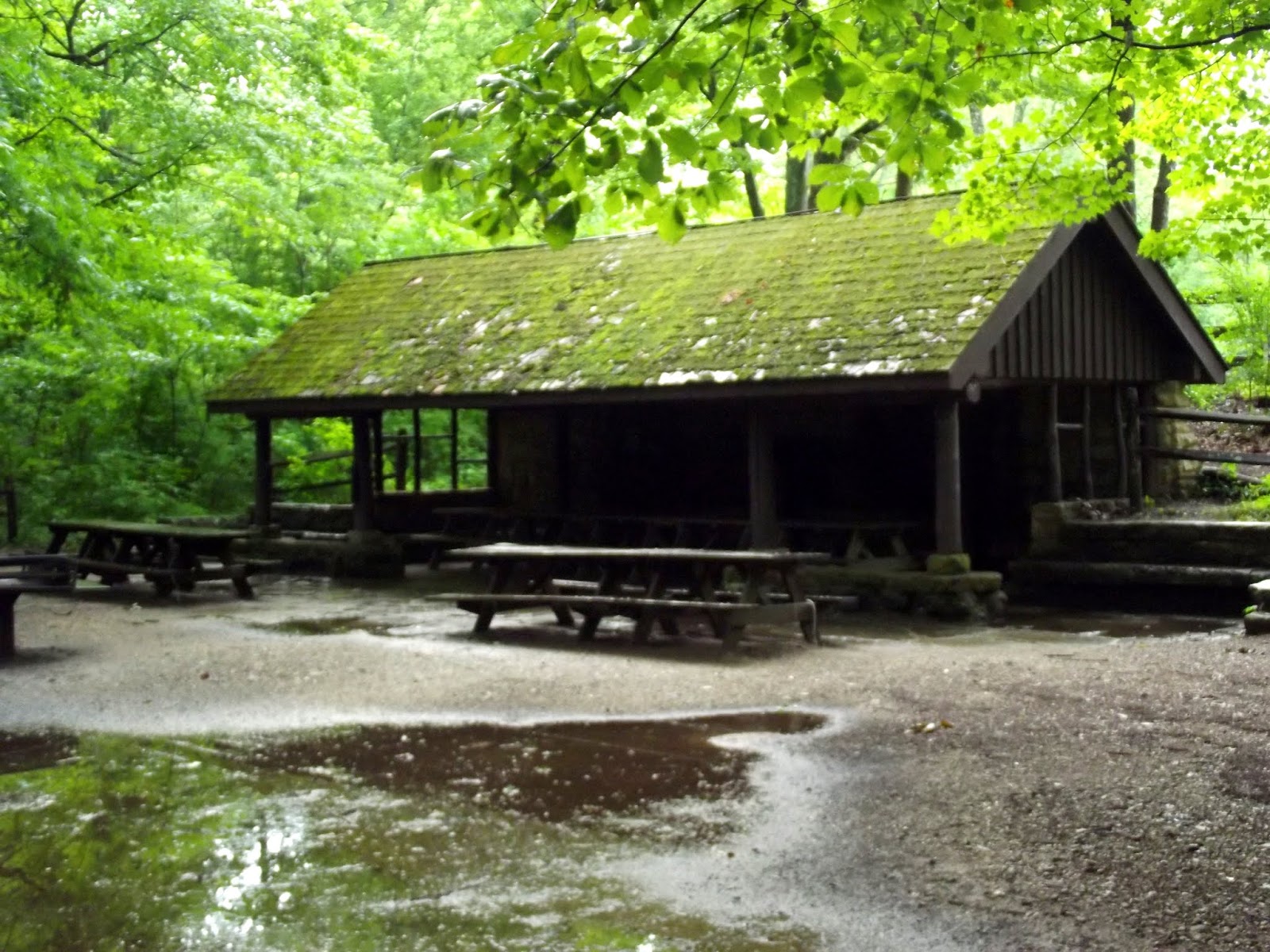
Photo of the Day - Versailles Lake

Photo of the Day
Versailles Lake
Versailles State Park
Versailles Indiana

Thursday, May 16, 2019

Sample Chapter - A Guide to Indiana State Parks - Civilian Conservation Corps (CCC)


A Guide to Indiana State Parks -
Civilian Conservation Corps (CCC)
The Civilian Conservation Corps built many of the trails, shelters and other facilities in the earlier state parks during the Depression years of the 1930’s.
History of the Civilian Conservation Corps
Established by executive order on April 5, 1933 by President Franklin D. Roosevelt, the CCC served as one of the most important parts of Roosevelt's New Deal program to deal with the high unemployment during the Great Depression. The United States Army helped provide transportation for the men that would work on environmental conservation projects around the United States. By July 1, 1933, the CCC had established 1433 camps around the country, providing jobs for 300,000 men. By 1935, the CCC would have 2600 camps with almost three million workers. The CCC built 97,000 miles of roadway, planted 2.3 billion trees, developed 800 state parks and over 13,000 miles of hiking trails in those parks. Additionally, the men of the CCC stocked lakes and rivers with over one million fish and constructed 3470 fire towers. To enlist in the CCC the men had to be United States citizens, in good physical shape, single and between the ages of 17 and 23. The CCC later increased this age to 26. The monthly pay was $30.00 per month. They had to send $25.00 per month home to their families. The CCC added an educational program, which enabled over 40,000 illiterate men to learn to read and write.

Sample Chapter - A Visit to Dunes State Park - JD Marshall Underwater Nature Preserve

JD Marshall Underwater Nature Preserve


A Visit to Indiana Dunes State Park
On June 11, 1911, the ship JD Marshall sank in stormy seas just offshore of Dunes State Park. Four sailors died in the tragedy. The sunken ship still lies there, just offshore, its historic artifacts preserved by statute as the JD Marshall Underwater Nature Preserve.
JD Marshall
The JD Marshall was built in 1891 in South Haven, Michigan. The ship had a beam of thirty-three feet and a draft of twelve feet. The ship had originally hauled lumber and industrial goods from port to port in the Great Lakes. The ship had been converted to a barge to suck sand from the lake bed and haul it to port to use for construction. Historians believe the boat had 1000 tons of sand on board when it capsized.
The Wreck
The JD Marshall had been dispatched to salvage the wreck of the Muskegon, which had been in the dock at Michigan City. The Muskegon had caught fire and sank on June 10, 1911. The ten man crew of the JD Marshall had completed the salvage job and had anchored just offshore to patch a leak that had occurred. Three men dove into the water to repair the leak. An unexpected squall created twenty-foot waves, which overturned the loaded ship. The three divers drowned. Captain Leroy Rand escaped and swam to shore. He commandeered a boat to use as a lifeboat to save the rest of the crew. He managed to save five crew members. Rescuers found the first mate, Martin Donohue, dead.
JD Marshall Underwater Nature Preserve
The 100-acre nature preserve is Indiana's first underwater nature preserve. Intended to promote understanding about the JD Marshall and other Indiana shipwrecks, the Preserve offers archeological protections to the site.  DNR staff mark off the boundaries with buoys seasonally at the four corners, with additional markers along the north boundary. Boats are forbidden to drop anchor within the boundary to prevent anchors snagging and destroying underwater artifacts. DNR staff conducts periodic interpretation programs about the site throughout the year. Visitors can see a display of a reconstructed pilothouse as well as artifacts from the boat at the Nature Center in the park. For more information, contact Dunes State Park.
Link to Site
https://www.in.gov/dnr/parklake/files/sp-JDM_FAQ.PDF

Sample Chapter - A Visit to Chain o' Lakes State Park -Chain o' Lakes State Park History

Chain o' Lakes State Park History

A Visit to Chain o' Lakes State Park
The massive ice sheets that covered most of North America during the Pleistocene Epoch, which lasted from approximately 2,588,000 to 11,700 years ago, formed the terrain that makes up Chain o' Lakes State Park. This event, commonly called the Ice Age, formed the landscape of northern Indiana, Illinois, Ohio and the rest of the Great Lakes states. The movement of the ice created the chain of kettle lakes that form the chain in the park.
Kettle Lake
Retreating glaciers form kettle lakes when they calve huge ice blocks. These massive blocks break away and carve depressions in the soft ground adjacent to the retreating glacier. When the ice melts, they leave behind shallow lakes that fill with sediment. Sudden breakage of an ice-dammed lake can also create a kettle lake. These lakes are seldom deeper than about thirty feet.
Chain o Lakes
The lakes in the state park formed between 13,000 and 14,000 years ago. Waters melting from the retreating glaciers carved the channels that connect the lakes.
Settlement
The Miami and Potawatami tribes inhabited the area at the time of white settlement. They had a village on the north shore of Indian Lake, now called Bowen Lake. The lake derives its name from the first settler, William Bowen.
William E. Bowen (Feb. 7, 1810 - May 5, 1881)
The son of Jonathan Bowen and Catherine Ermentrout, William was native to Lebanon in Berks County, Pennsylvania. He and Elizabeth Whitesell married in 1831. The couple would have seven children. The Bowens moved to Noble County in 1837, inhabiting the area now included in Chain O' Lakes State Park. William constructed a cabin on the north shore of Indian Lake in 1840. Bowen would serve as township justice of the peace, county sheriff and treasurer of Noble County. He and his wife are interred at Albion Cemetery.
Stanley School House

Constructed in 1915, the school is the fourth schoolhouse to occupy the site. The first structure, a log building, was built around 1845. A wood frame structure replaced the log one in 1855. This school burned down in 1880 and was replaced by a brick schoolhouse. This one burned down also and the current schoolhouse replaced it in 1915. It was common practice at the time to name a schoolhouse after a nearby farmer, thus the Stanley Schoolhouse derives its name from local farmer, Henry Stanley. The school remained open until closing in 1954. It was the last one room schoolhouse in Noble County and possibly one of the last ones in Indiana. After closing, the school stood vacant until Chain o' Lakes State Park opened in 1960. The park initially used it as a nature center until 2011. The National Register of Historic Places listed the schoolhouse in 2015, after the park restored it to its original appearance. 
Park Development
The precursor of the Department of Natural Resources, the Department of Conservation, recommended that the area around the chain of lakes be developed into a state park in 1955. The Indian General Assembly supported this in 1956. Commissioners from Noble, Whitley and Allen counties formed a joint board to purchase the land necessary for the park. This board acquired 1200 acres, with the State of Indiana purchasing an additional 300 acres. Dedication ceremonies for Chain o' Lakes State Park took place on June 12, 1960.

Photo of the Day - Early Morning at Spring Mill State Park

Photo of the Day
Early Morning at Spring Mill State Park

Wednesday, May 15, 2019

Sample Chapter - McCormick's Creek State Park - History of the Park


A Visit to McCormick's Creek State Park
Sample Chapter
McCormick's Creek State Park
History of McCormick's Creek State Park
Prior to settlement, many Amerindian tribes hunted the area's rich wildlife population and utilized many of the other food sources in the area. Tribes using the land included the Miamis, Pottawatomies, Eel River Indians and Delaware tribes. Game animals included white tailed deer, wild turkeys, bison, squirrels and rabbits. The forests yielded a rich supply of nuts and acorns while the forests floor provided blackberries, raspberries, plum, persimmons and grapes.
Too Poor to Farm
Early settler John McCormick homesteaded about 100 acres of land in the area around the waterfall on what became known as McCormick's Creek in 1816. Numerous attempts to build a gristmill failed because the creek's water flow was not sufficient. The soil was too poor to farm and the difficult terrain made transportation of the quarried limestone in the area almost impossible.
Sanitarium
Physician Frederick Denkewalter, impressed with the tranquil atmosphere of the site, established a sanitarium on the site now occupied by Canyon Inn in 1888. When Dr. Denkewalter passed away in 1914, the State of Indiana purchased his estate for the establishment of a state park.
First State Park
The founder of the Indiana State Park system Richard Lieber had become aware of the area and pressed for the property to be used as one of the state's first state parks. In honor of Indiana's centennial in 1916, the state established the state park system, with McCormick's Creek becoming the first state park on July 4, 1916. The park's dedication was part of the state's Centennial celebration. Originally, 350 acres, the park has grown to 1924 acres through the acquisition of surround farmland.
John Wesley McCormick, I (August 30, 1754 - April 18, 1837)
The son of Francis W McCormick and Ann Provance, John was native to Winchester Virginia. He served in three different regiments during the Revolutionary War, from 1776 through 1783. During the course of the war, McCormick moved to Pennsylvania, where he married Catherine Drennen. The couple would have fourteen children. In 1808 the family moved by wagon, then flatboat, to Preble County, Ohio. A short time after moving to Ohio, the family moved into the Indiana Territory. They first settled at Connersville, but moved away due to troubles with the natives. In 1816, McCormick settled in the area that is now McCormick's Creek State Park. John died on April 18, 1837, Catherine on February 22, 1862. A stone marker inside the state park marks the site of their cabin.
Dr. Frederick William Denkewalter (February 20, 1842 - June 28, 1914)
A native of Baden, Germany, Dr. Denkewalter immigrated to Indianapolis in 1870, where he opened a drug store. Denkewalter founded the Spencer Mineral Springs Hotel and Sanitarium in 1888 near Spencer, Indiana. He passed away in his home in Spencer, Indiana from heart failure.  And is interred at Crown Hill Cemetery, Indianapolis.
Richard Lieber (September 5, 1869 – April 15, 1944) 
Visitors to Turkey Run will find the Richard Lieber Memorial east of Turkey Run Inn behind the Log Church. The Memorial contains the ashes of the founder of the Indiana State Park system. Born in Düsseldorf, Germany to a wealthy family, he received his education from private tutors.
Immigration to Indiana
To fulfill his parent's desire to learn English, he traveled to London, England after graduating from college. In 1891, he came to Indianapolis, Indiana in to join two uncles who had immigrated there. He eventually became an American citizen. He worked as a reporter for the Indiana Tribune and married the owner's daughter, Emma Rappaport. After visiting Yosemite National Park, the Rocky Mountains of Idaho and Montana in 1900, he became an ardent conservationist. President Theodore Roosevelt held Conference of Governors in 1908, which Lieber attended as a delegate. He wrote a series of articles promoting Indianapolis as the site for the Fourth National Conservation Congress in 1912. He succeeded in his effort, and served as the chairman.
Founder of Indiana State Park System
As Indiana's centennial approached, Lieber began advocating for a state park system. Because of his efforts, Turkey Run and McCormick's Creek State Park were established in 1916. Lieber passed away while visiting McCormick's Creek in 1944. His ashes lie at Turkey Run State Park.

Photo of the Day - Mama and Baby

Photo of the Day
Mama and Baby